← All GuidesToolPlate count
Plate count
per section
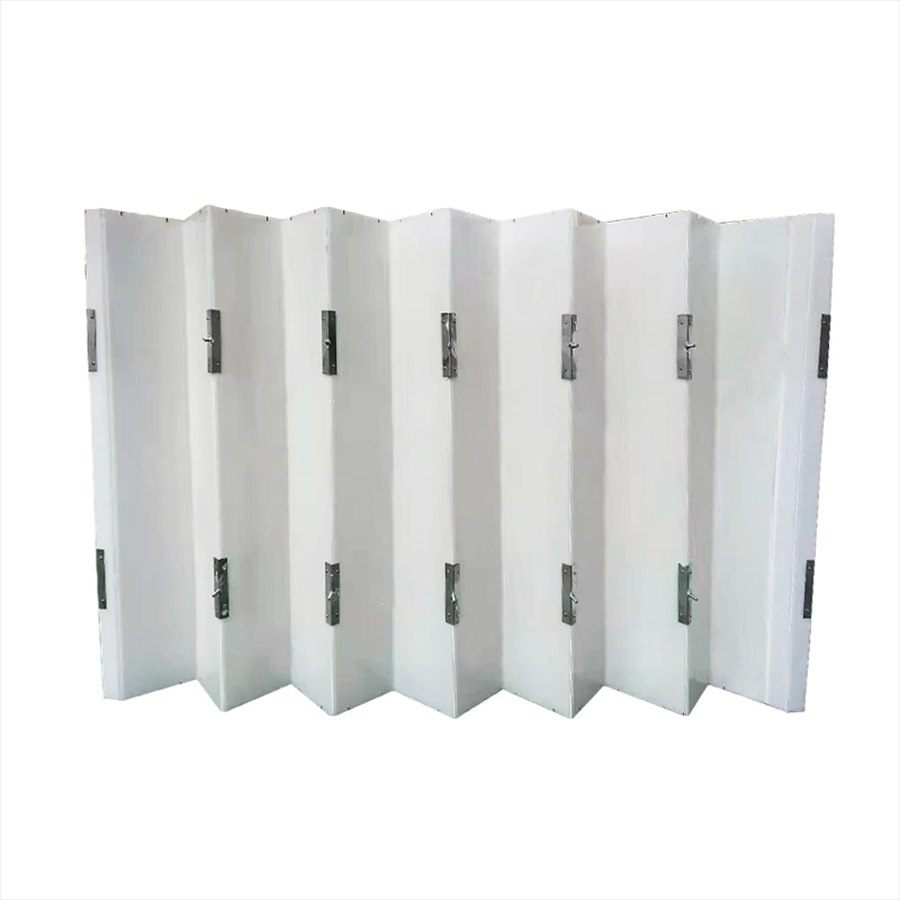
How many folded plates go into one flocculation section - worked out from the clear width, the fold pitch and the gap between plates, with the arithmetic shown line by line.
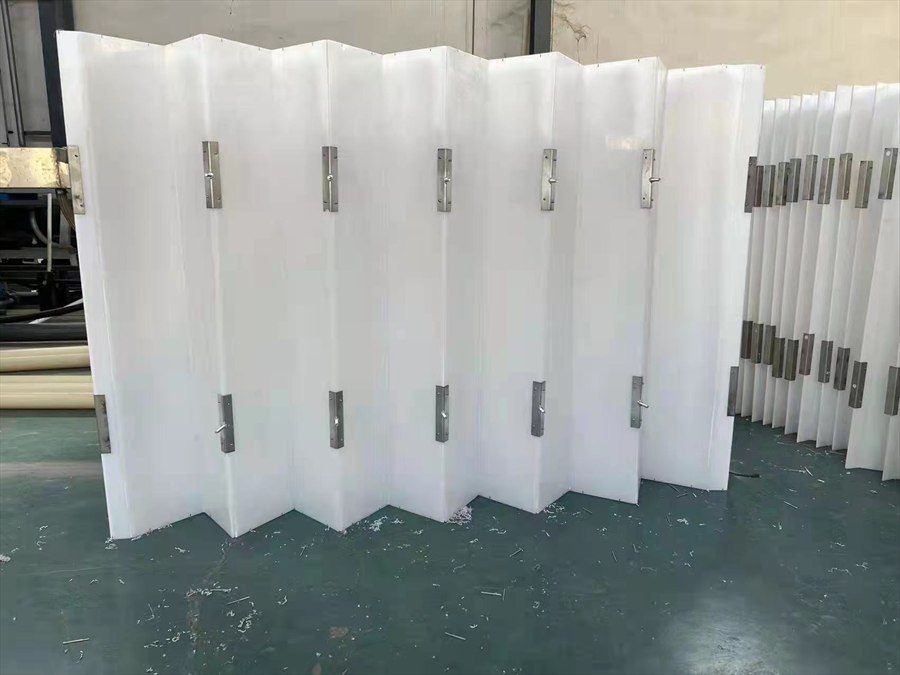
How many folded plates go into one flocculation section - worked out from the clear width, the fold pitch and the gap between plates, with the arithmetic shown line by line.
Plates per section is the clear width divided by the fold pitch plus the clear gap. Both of those follow from the velocity you want through that stage, so the count changes when the design changes.
plates per section = W ÷ (p + g)
W = clear width of the basin or channel at that section · p = fold pitch (the horizontal distance one fold occupies) · g = clear gap between plates
Note on the result: the pitch and the gap are process decisions, not free choices - a tighter pitch strengthens the micro-vortices but raises the head loss you pay through that stage. The calculator tells you what a given pair of numbers does to the plate count; it does not tell you which pair to choose. Send us the width, design flow and velocity profile and we confirm the pitch, the gap and the layout for each section.
The count for one stage. Because each stage runs slower than the one before, the pitch usually opens up along the train and this figure falls from the first section to the last.
The width rarely divides exactly. The remainder is taken up as end clearance rather than by dropping a plate, which would change the velocity through that section.
Plates per section multiplied by the number of sections - the number to use when you are pricing fabrication or planning installation.
The questions that come up when an engineer is laying out a folded-plate flocculator.
Divide the clear width of that section by the fold pitch plus the clear gap between plates. With a 2000 mm clear width, a 100 mm fold pitch and a 50 mm gap, the pitch unit is 150 mm and the section takes 13 plates, using 1950 mm of the width and leaving 50 mm to the wall.
Because the width rarely divides exactly by the pitch unit. In practice the remainder is taken up in the end clearance or adjusted in the gap rather than by dropping a plate, which would change the velocity through the section.
Those are the two numbers that carry the process decision. A tighter pitch and gap contract and expand the flow harder, which strengthens the micro-vortices but costs head loss. Send the clear width, design flow and the velocity profile you are working to and we confirm pitch, gap and section layout for each stage.
It can. Each stage runs slower than the one before, so the pitch usually opens up along the train and the plate count per section falls with it. Run the calculator once per section using that section's width and pitch.
Clear width, design flow and the velocity profile - we return the pitch, gap, plate count and head loss for each section.
Ask for a specification checkNo obligation - response within 24h (working days)