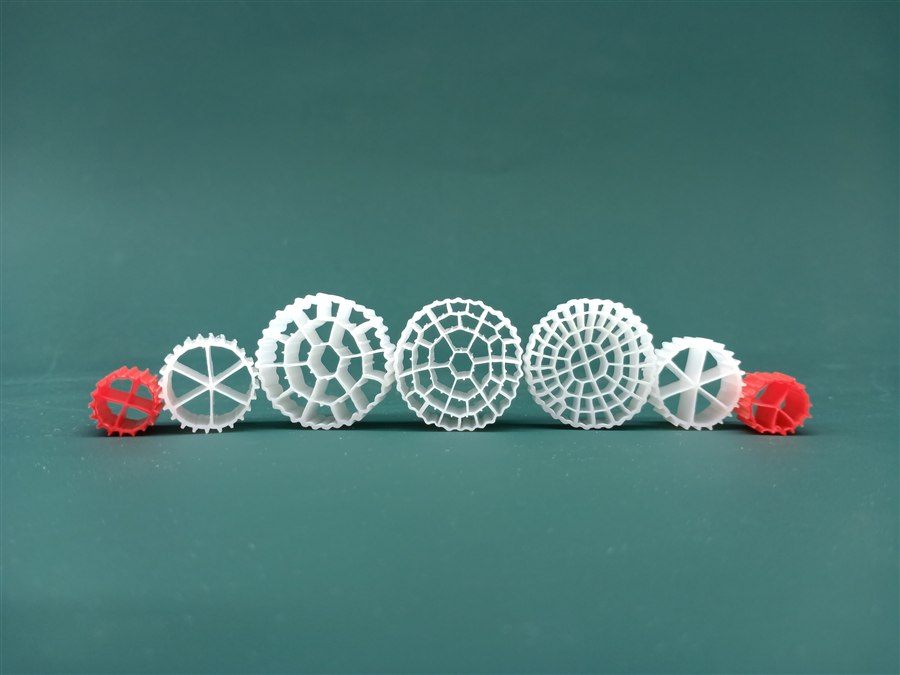
There is no single price per cubic metre, because the cubic metre is not one product. Here is what actually moves the number, and the five points to put in an enquiry so two suppliers are quoting the same thing.

Material gets the attention, but on a retrofit it is rarely the biggest lever.
| Factor | Why it moves the price |
|---|---|
| Material | PP is the default; FRP reaches higher surface area; stainless steel is a different order of cost entirely and is specified only when the duty demands it. |
| Pore size | Finer pores give more surface per m3 and can reduce the volume needed, but raise the sheet area per m3 and the manufacturing tolerance. |
| Sheet thickness | 0.4, 0.5 or 0.8 mm - thickness follows the span and the loading, so it is not a free downgrade. |
| Total volume | Quoted in cubic metres, and the volume comes from settling area, not from the tank volume. This is the term that differs most between two suppliers. |
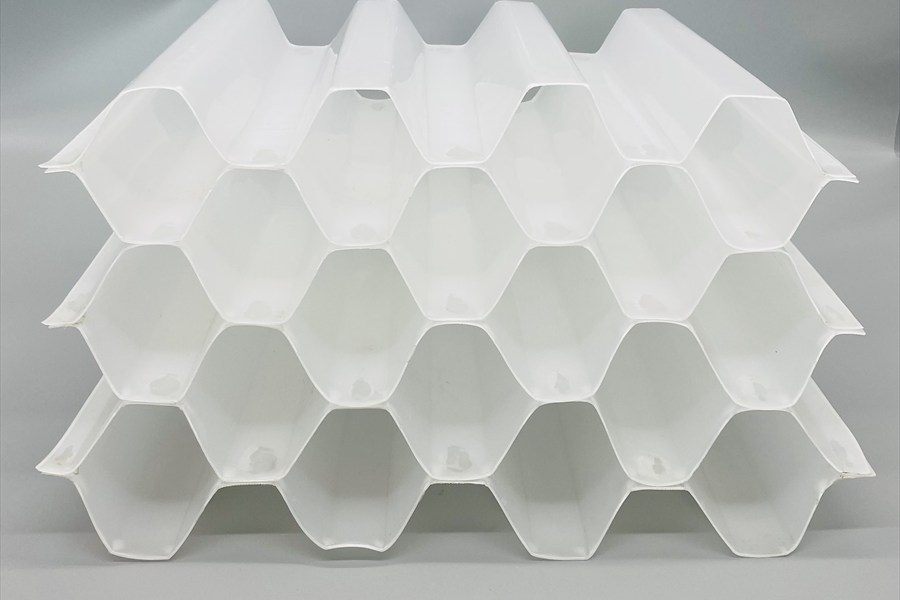
| Standard panel or cut-to-fit | A standard 1000 x 500 x 1000 panel is a production item; modules cut around existing weirs, launders and scrapers are fabrication. |
| Support and restraint | How the stack is carried and tied down for drain-down is part of a workable quote - omit it and it appears later as an extra. |
| Packing and delivery | Media is bulky and light, so packing density decides the freight bill. State the port and the delivery term. |
With these in the enquiry, two quotations can actually be compared.
PP, FRP, E-P co-polymer or stainless steel - and the grade where the duty fixes it.
For example Φ50 mm at 0.5 mm. Both numbers, not just the pore size.
Either the volume in m3, or the flow rate, basin dimensions and the surface loading rate to be designed to.
Whether the basin takes standard panels or needs modules cut to a drawing, and who surveys the basin.
The destination port and whether you want the price ex-works, FOB or delivered. Freight on a light bulky load is not a rounding error.
The number you are really buying is settling area, not volume.
Settling area comes from the flow rate divided by the surface loading rate. Volume is what that area becomes once you multiply by the stack height. So a supplier who designs to a higher loading rate needs less media for the same flow - and a lower unit rate on a smaller volume can look like the cheaper offer while delivering a pack that will not hold the effluent quality you asked for.
That is why we publish the loading rate, the velocity inside the tubes and the surface area per m3, and design from the flow rather than quoting a volume: with those figures in the open, the two offers can be checked against each other instead of against the price column. The sizing and specification guide shows the arithmetic and the calculator runs it for your own numbers.
The questions buyers actually ask about the price of this media.
Price is on request, and that is not evasive: the cubic metre is not one product. PP and stainless steel are different orders of cost, sheet thickness moves with the span, a standard 1000 x 500 x 1000 panel and a module cut to your basin drawing are different jobs, and the export packing and destination port change the delivered figure. A published unit rate would be right for one combination and wrong for every other one.
Usually because they are not quoting the same volume. Volume comes from settling area, and settling area comes from the surface loading rate the supplier designed to; a quote built on a higher loading rate needs fewer cubic metres of media and can look cheaper while promising less. Before comparing unit prices, check that both quotes assume the same loading rate, the same material and the same sheet thickness.
It changes both sides of the sum: finer pores give more surface area per cubic metre, which can reduce the volume you need, while the sheet area per cubic metre and the tolerance in manufacture go up. The useful comparison is total installed cost for the same duty - not the rate per cubic metre.
Substantially more, between the material and the fabrication. It is specified where the duty asks for it - high temperature, aggressive water, or mechanical abuse during cleaning - not as an upgrade for its own sake. For ordinary municipal and industrial clarification, PP or E-P co-polymer is the cheaper engineering answer.
Yes, and on retrofits it is normal: the modules are cut around the existing weirs, launders and scraper arms. Cutting to a drawing is extra fabrication compared with a standard panel, so tell us whether the basin takes standard 1000 x 500 x 1000 panels or needs a cut-to-fit set.
Five things: material and grade, pore size and sheet thickness, the total volume in m3 or the basin dimensions and target loading rate, whether the panels are standard or cut-to-fit, and the destination port together with the delivery term you want quoted. With those, two suppliers are quoting the same scope.
Flow rate, basin dimensions and the target solids - we will return the media volume, the loading rate it is designed to, and a price against that specification.
Request a quotationNo obligation - response within 24h (working days)