← All GuidesToolFilter nozzle
Filter nozzle
count per plate
How many nozzles a nozzle plate needs, worked out from the plate plan dimensions and the nozzle grid - with the arithmetic shown line by line.
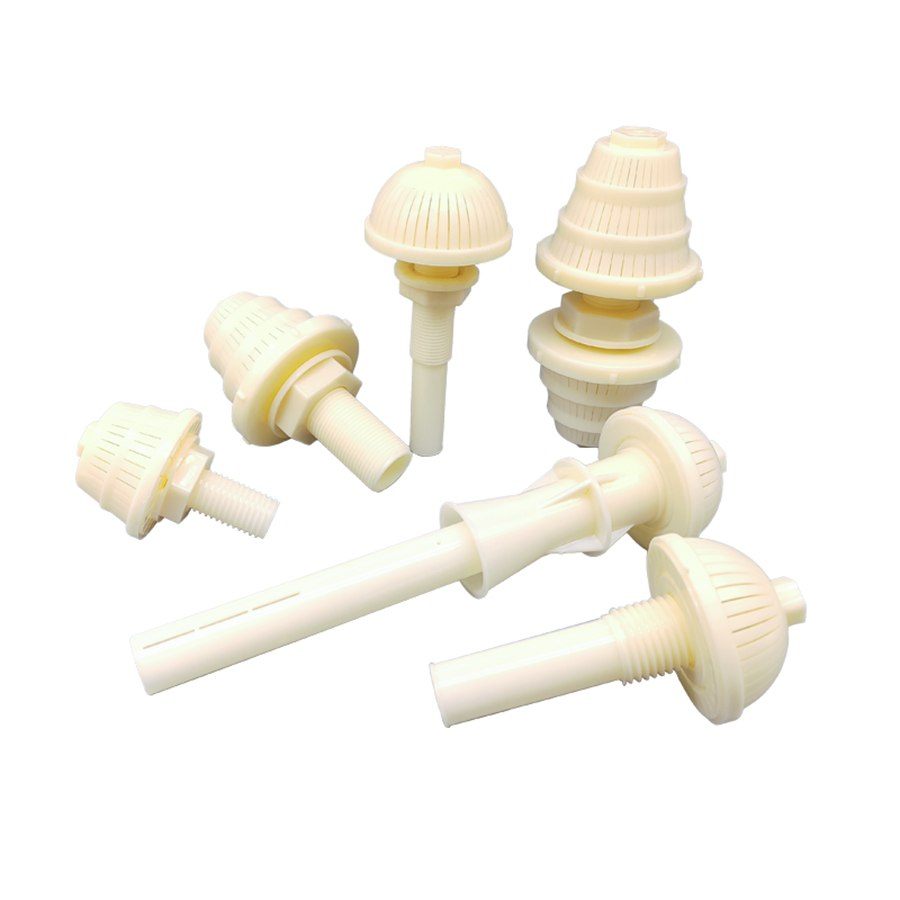
How many nozzles a nozzle plate needs, worked out from the plate plan dimensions and the nozzle grid - with the arithmetic shown line by line.
Each nozzle sits in one cell of a grid. Count the cells and you have counted the nozzles - the work is in deciding the grid, not in the division.
nozzles = (L × W) ÷ (sx × sy)
L = plate length · W = plate width · sx = nozzle spacing across the length · sy = nozzle spacing across the width (all in the same units)
Note on the result: the two spacings are process decisions, not free choices. A tighter grid spreads the load and the backwash flow more evenly but multiplies the parts count and the tapping work. The calculator tells you what a given grid produces; it does not tell you which grid to choose. Send the plate drawing, the media grading and the backwash air and water rates and we confirm the grid with you.
The count is for whole cells. Edge and corner nozzles have to be inset far enough to keep the thread clear of the plate edge, so a plate rarely takes exactly length divided by spacing.
The figure that lets you sanity-check a specification quickly. It is simply one divided by the cell area, and it should match whatever a supplier quotes you for the same grid.
Multiply by the number of cells sharing the plate type - the number to use when you are pricing the nozzles against a filter battery rather than a single cell.
The nozzle is one part of a system, and it only works if the other three parts agree with it.
Related reading: which media belongs at each treatment stage and the glossary of media terms.
The questions that come up when an engineer is laying out a nozzle plate.
One nozzle per nozzle grid cell, so the count per square metre is one divided by the product of the two spacings in metres. At a 150 mm by 150 mm grid that is about 44 nozzles per square metre; at 200 mm by 200 mm it is 25. The spacing itself is a design decision, not a catalogue figure - it follows from the media grading, the backwash air and water rates and the strength of the plate.
Three things pull against each other: the media grading above the plate, which sets the largest opening the support layer can bridge; the backwash air and water rates, which need enough open area to pass without excessive pressure; and the plate itself, which has to carry the load between supports. Closer spacing spreads the load and the flow more evenly but multiplies the parts count and the tapping work.
By area, in practice. The nozzle count follows from the grid, and then the open area of the grid is checked against the service flow rate and the backwash rates. Counting from flow alone usually produces a grid that does not line up with the plate edges, which wastes a row of nozzles and complicates fabrication.
Yes, for spares rather than for the installed count. Nozzles are the part most likely to be damaged during media replacement, and a small stock of the same thread and head type is cheaper than a mismatched replacement later. The installed number itself should not be padded - an extra row changes the flow distribution across the plate.
Plate plan, media grading and the backwash air and water rates - we return the nozzle grid, the thread and the parts count for the battery.
Ask for a specification checkNo obligation - response within 24h (working days)